
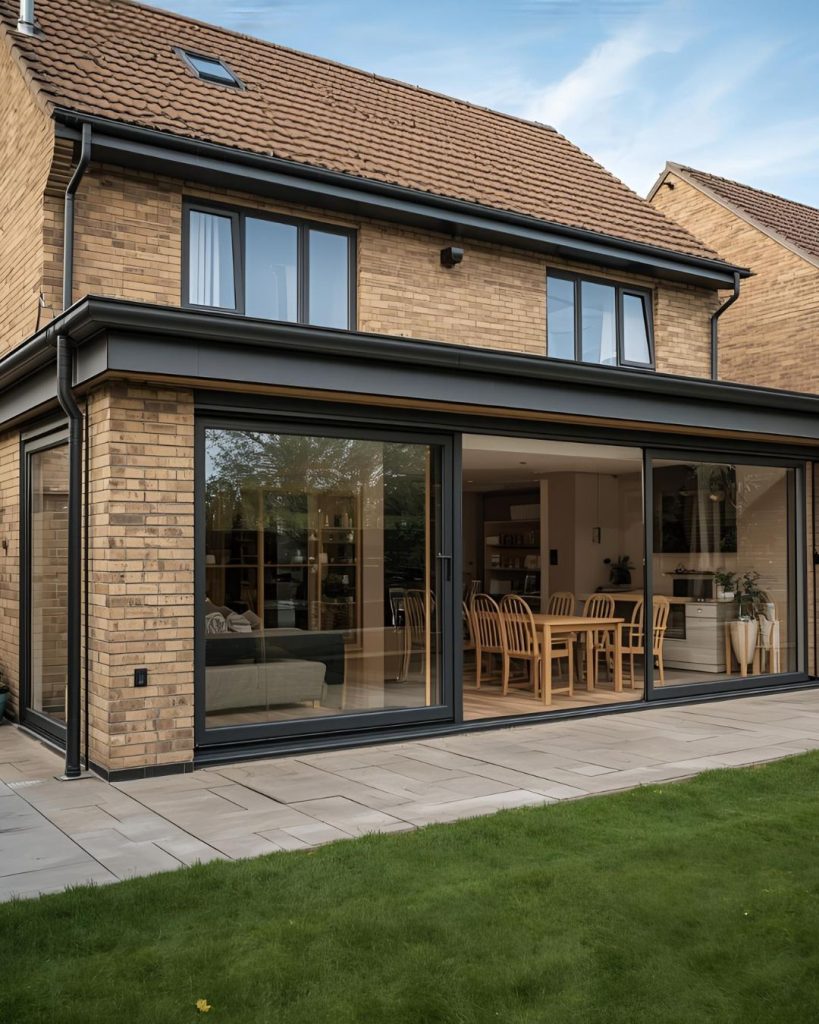
Different Types of Roof Explained | Ipswich Builder’s Guide
The roof is one of those parts of your home that most people don’t think much about until they’re planning an extension, dealing with a repair, or trying to work out why their loft conversion quote is higher than their neighbour’s. But the type of roof on your property affects everything from how the house looks and how much loft space you have to how well it sheds water, how long it lasts, and what options are available when you want to extend or convert.
Understanding the main roof types helps you make better decisions about building projects, spot potential issues during property purchases, and have more informed conversations with your builder. This guide covers the most common roof styles found on homes across Ipswich and Suffolk, explains how each one works, and looks at which types suit different building projects.
Gable Roofs
The gable roof is the classic triangular roof shape that most people picture when they think of a house. Two sloping sides meet at a central ridge, with a vertical triangular wall — the gable — at each end. It’s the most common roof type across the UK and you’ll find it on everything from Victorian terraces around Christchurch Park to modern detached homes in Kesgrave and Martlesham.
Gable roofs are popular for good reason. The simple geometry means they’re relatively straightforward and cost-effective to build. The steep pitch sheds rain and snow efficiently, which matters in the British climate. The triangular void beneath the ridge creates useful loft space that can be used for storage or, with the right structure, converted into a habitable room. Ventilation is easy to achieve through the gable end walls, which helps prevent condensation and moisture build-up in the loft.
The main consideration with a gable roof is wind exposure. The flat gable end wall can catch wind more than a hipped end, which is worth bearing in mind for exposed sites, though for the vast majority of Ipswich properties this isn’t a practical concern.
When it comes to extensions, a gable roof is a natural choice for a rear or side extension where the new roof needs to match the existing house. Matching the pitch angle and tile to the original roof makes the extension look like it was always part of the property rather than an obvious addition.
Hip Roofs
A hip roof slopes on all four sides rather than having vertical gable ends. All sides meet at the ridge or, in the case of a square plan, at a single point. Hip roofs are extremely common on 1930s semi-detached houses, which make up a large proportion of the housing stock in areas like Whitton, Castle Hill, and Sprites across Ipswich.
The all-round slope gives a hip roof better wind resistance than a gable because there’s no flat end to catch gusts. They also tend to look lower and more proportionate on wider properties, which is why the style was so popular during the interwar building boom. The overhanging eaves on all sides provide consistent weather protection around the entire perimeter of the house.
The trade-off is internal space. Because the roof slopes inward on all sides, the usable loft space is smaller than in a comparable gable roof. This becomes particularly relevant when planning a loft conversion. Converting a hip roof loft often requires a hip-to-gable conversion — rebuilding one or both hipped ends as vertical gable walls to create enough headroom and floor area for a usable room. This adds cost compared to converting a gable loft, but the result is a significantly more spacious conversion.
For extensions, a hip roof can be used to match an existing hipped house, maintaining visual consistency. However, many rear extensions on hipped houses use a lean-to or flat roof instead because the extension sits below the main roof line and a full hip structure isn’t necessary.
Lean-To Roofs
A lean-to roof, also called a mono-pitch or single-slope roof, has one sloping surface that leans against the existing wall of the house. It’s the most common roof type for single storey rear extensions and is found on thousands of homes across Ipswich.
The lean-to is popular for extensions because it’s simple, cost-effective, and works within the height constraints that most rear extensions face. The high point where the roof meets the house wall allows for generous ceiling height inside the extension, while the slope carries rainwater away to a gutter at the lower edge. The pitch can be adjusted to suit the proportions of the extension — steeper for a narrower extension, shallower for a deeper one — though Building Regulations set minimum pitch requirements for different covering materials.
A lean-to roof can be finished in tiles to match the existing house, in slate, or in a single-ply membrane for a more contemporary look. For extensions with a lower pitch, a fibre-glass or rubber membrane roofing system is often used because traditional tiles require a steeper angle to function properly.
The main limitation is that a lean-to roof doesn’t suit every situation. On a two storey house where the extension is relatively deep, the low point of the roof can end up uncomfortably close to the ground, limiting window height and headroom at the back of the extension. In these cases, a pitched roof with a central ridge or a flat roof may be a better solution.
Flat Roofs
Flat roofs aren’t truly flat — they have a slight fall, typically between one and five degrees, to ensure rainwater drains rather than pooling. They’re common on single storey extensions, garages, dormers, and some modernist house designs.
The main advantage of a flat roof is that it maximises internal headroom across the entire footprint of the room below. Where a pitched roof slopes down at the edges, reducing usable space near the walls, a flat roof gives you full ceiling height right to the perimeter. This makes flat roofs a popular choice for contemporary extensions where a clean, modern aesthetic is important, and for situations where the extension sits below first floor windows and height is restricted.
Flat roofs have historically had a poor reputation because older felt-covered flat roofs had a limited lifespan and were prone to leaks. Modern flat roof systems are a different proposition entirely. EPDM rubber membrane, fibre-glass (GRP), and single-ply membranes like Sarnafil and Firestone offer lifespans of 30 to 50 years when installed correctly. They’re fully waterproof, UV-resistant, and require minimal maintenance.
For extensions across Ipswich, flat roofs work particularly well on contemporary kitchen-diners and open-plan living spaces where large skylights or roof lanterns can be incorporated. A flat roof with a central roof lantern floods the room with natural light in a way that a pitched roof with small Velux windows can’t replicate.
Mansard Roofs
A mansard roof has two slopes on each side — a near-vertical lower slope and a shallower upper slope, often hidden behind a small parapet. The steep lower section creates maximum usable space within the roof, effectively turning the entire loft into a full-height room with vertical or near-vertical walls.
Mansard roofs are less common on standard Ipswich housing but are seen on period properties in the town centre and are increasingly popular as a loft conversion style. A mansard conversion replaces the existing roof structure entirely, building a new mansard profile that provides far more headroom and floor area than a dormer conversion on the same property. The result is essentially a full additional storey rather than a room squeezed into the roof space.
The significant advantage of a mansard is space. The near-vertical walls mean you can use the entire floor area without the sloping ceilings that limit furniture placement in other conversion types. The disadvantage is cost and planning — mansard conversions almost always require planning permission because they significantly change the profile of the roof, and the structural work involved is more extensive than a standard dormer conversion.
Dormer Roofs
A dormer isn’t a roof type in itself but rather a structure that projects from an existing sloped roof, creating additional headroom and floor space within the loft. Dormers have their own small roof — typically flat, pitched, or hipped — and a vertical front wall with a window.
Rear dormers are the most common type used in loft conversions across Ipswich. A flat-roofed rear dormer extending across the full width of the house creates a dramatic increase in usable space compared to the original sloping roof. Most rear dormers fall within permitted development for houses, avoiding the need for planning permission, which makes them the most popular choice for straightforward loft conversions.
Front dormers and side dormers are smaller, typically covering one or two windows rather than the full width of the roof. They’re often used to add headroom and light to specific areas rather than to maximise overall floor space. Front dormers usually require planning permission because they change the appearance of the street-facing elevation.
Which Roof Type Suits Your Project?
The right roof depends on the type of project, your property’s existing style, and what you want to achieve. For rear extensions, a lean-to or flat roof suits most single storey projects, while a pitched gable or hip roof works better for double storey additions. For loft conversions, the existing roof type determines your options — a gable roof converts most easily, a hip roof benefits from a hip-to-gable conversion, and a mansard provides maximum space where planning permission allows.
Matching the new roof to your existing house is important for visual coherence. An extension that jars with the original property’s style looks like an afterthought, while one that complements the existing roof line looks intentional and adds value. Your builder should advise on which roof type works best for your specific property and project.
If you’re planning an extension, loft conversion, or any roofing project at your Ipswich home, get in touch for a free consultation. We’ll look at your property, discuss your options, and recommend the roof type that delivers the best result for your project and your budget.